
Gavel: A live auction platform that combines live video shopping with live auctions
Category: Auction, eCommerce
Services: DevOps, Cloud Architecture Design and Review
Category: Auction, eCommerce
Services: DevOps, Cloud Architecture Design and Review

Gavel is a live auction platform that brings collectors, buyers, and sellers together. Gavel combines live video shopping with live auctions to add fun and discoverability to online purchasing. Gavel allows you to chat in the Gavel app with like-minded people in the virtual room, ask questions during the show, and bid on your favorite items directly.
The client’s existing deployment process was manual and error-prone, which was leading to delays and inconsistencies in their deployments. They needed a way to automate their deployment process and ensure that their deployments were consistent and reliable.
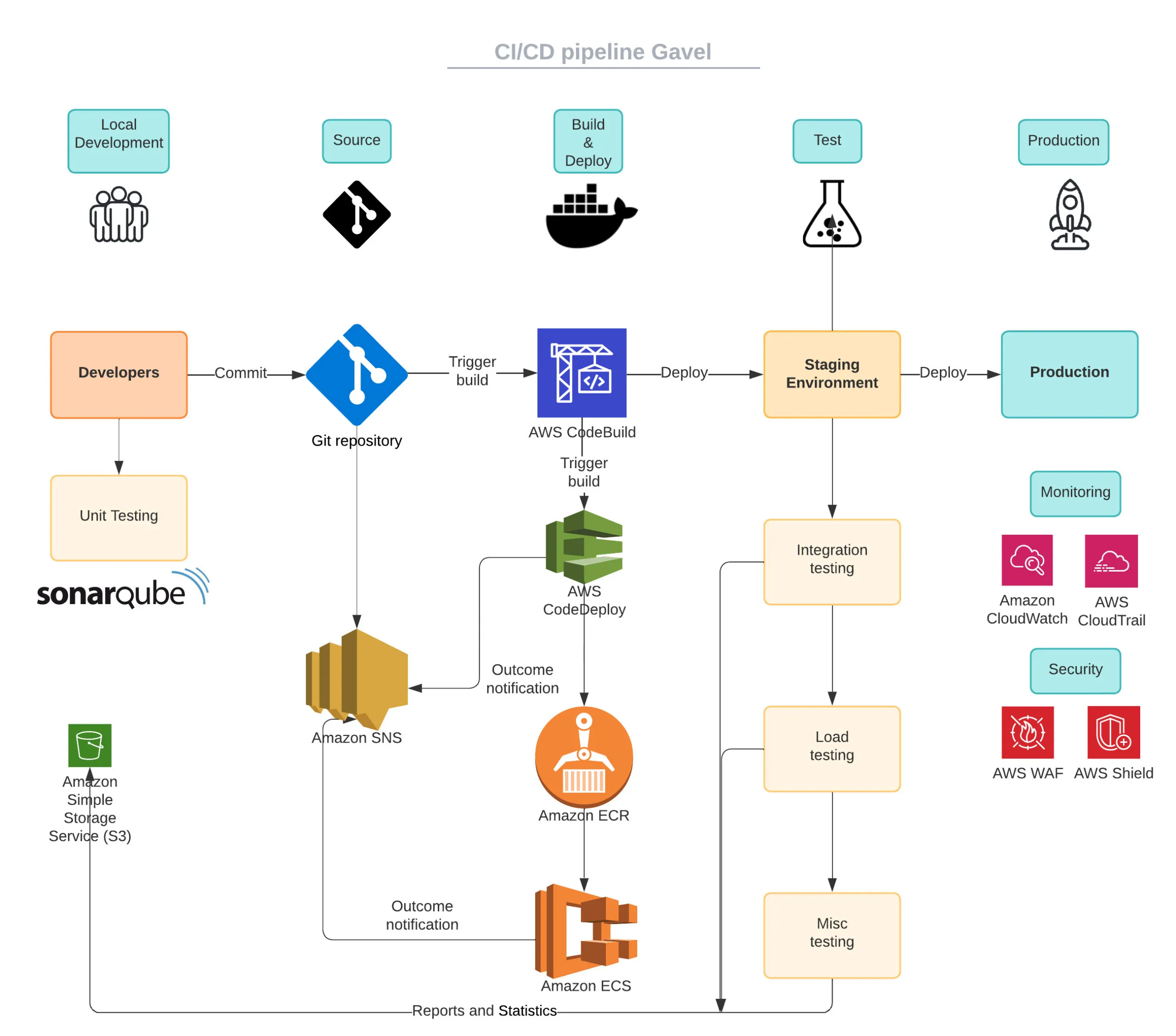
We used AWS CodePipeline to automate the client’s deployment process (for multiple environments) it automatically builds and tests their code, and then deploys it to the provided environment. The pipeline was configured to automatically trigger on code changes in their source code repository, which eliminated the need for manual intervention in the deployment process.
We also configured the pipeline to use AWS CloudFormation to manage the client’s infrastructure. This allowed us to define their infrastructure as code and automate the creation and management of their resources.
Additionally we utilized several tools within the pipeline, which made sure the code’s quality and integrity remains intact , such as Pre commit hooks, Sonarqube and Unit testing
With the new CI/CD pipeline in place, the client was able to achieve faster and more reliable deployments. The pipeline eliminated the need for manual intervention in the deployment process, which helped reduce the risk of human error and ensured consistent and reliable deployments.
The client was also able to improve their development process by using the pipeline to automate their testing and deployment processes. This allowed them to focus on developing new features and updates, rather than spending time on manual deployment tasks.
In addition, the client was able to achieve cost savings by using AWS CodePipeline. By automating their deployment process, they were able to reduce the amount of time and resources needed to manage their deployments.
By leveraging AWS CodePipeline, our client was able to achieve faster and more reliable deployments, improve their development process, and achieve cost savings. The new CI/CD pipeline eliminated the need for manual intervention in the deployment process, which helped reduce the risk of human error and ensured consistent and reliable deployments. Overall, the new pipeline helped our client deliver new features and updates to their customers faster and more efficiently.



We do not collect any information about users, except for the information contained in cookies. We store cookies on your device, including mobile device, as per your preferences set on our cookie consent manager. Cookies are used to make the website work as intended and to provide a more personalized web experience. By selecting ‘Required cookies only’, you are requesting Simform not to sell or share your personal information. However, you can choose to reject certain types of cookies, which may impact your experience of the website and the personalized experience we are able to offer. We use cookies to analyze the website traffic and differentiate between bots and real humans. We also disclose information about your use of our site with our social media, advertising and analytics partners. Additional details are available in our Privacy Policy.
These cookies are necessary for the website to function and cannot be turned off.
Under the California Consumer Privacy Act, you may choose to opt-out of the optional cookies. These optional cookies include analytics cookies, performance and functionality cookies, and targeting cookies.
Analytics cookies help us understand the traffic source and user behavior, for example the pages they visit, how long they stay on a specific page, etc.
Performance cookies collect information about how our website performs, for example,page responsiveness, loading times, and any technical issues encountered so that we can optimize the speed and performance of our website.
Targeting cookies enable us to build a profile of your interests and show you personalized ads. If you opt out, we will share your personal information to any third parties.