Downloaded by 180+ CTOs and engineering leaders
from enterprises worldwide
What’s inside the whitepaper
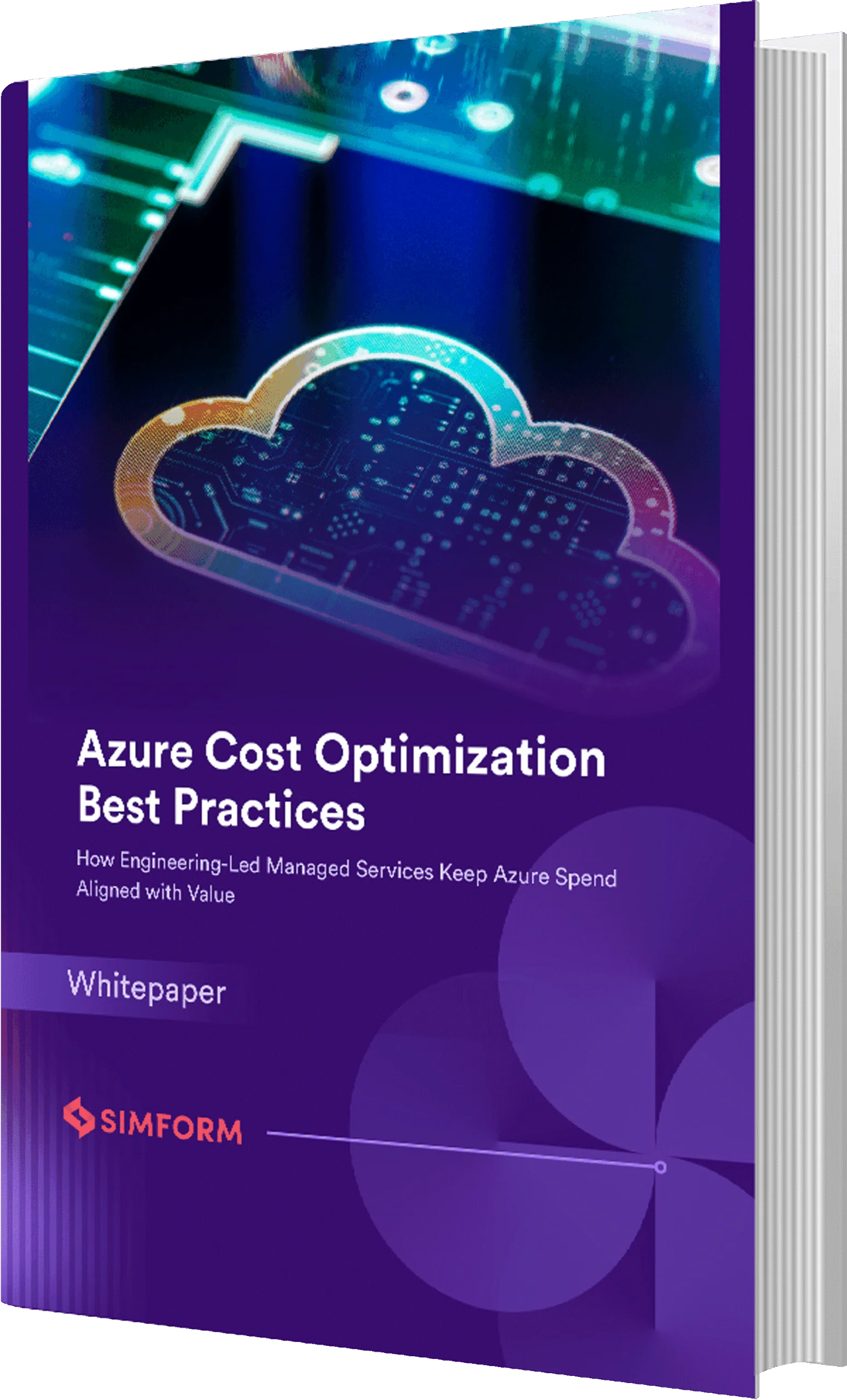
Many organizations move to Azure expecting greater cost efficiency, yet controlling spend often becomes harder as environments scale. Architectural complexity increases, workloads evolve, and ownership becomes distributed across teams, making cloud costs harder to predict and manage. Drawing on Simform’s experience operating Azure environments for scaling enterprises, this whitepaper examines the structural and operational factors shaping cloud economics and outlines practical approaches organizations can use to embed cost discipline into day-to-day cloud operations.
Cloud cost realities
Examine why cloud spend continues to rise even as cost tooling and FinOps adoption improve, and how evolving architectures and distributed ownership influence long-term cost behavior.
Limits of traditional optimization
Understand why one-time optimization drives, discount strategies, and dashboards alone fail to stabilize cloud economics in dynamic Azure environments.
Structural Azure cost drivers
Learn how architecture, scaling patterns, platform standards, and operational practices collectively shape the long-term cost profile of Azure estates.
Infrastructure cost optimization practices
Explore practical techniques for reducing infrastructure spend across compute, storage, networking, and data platforms using Azure-specific capabilities and patterns.
Operational hygiene practices
Discover repeatable practices that prevent cost drift, from lifecycle management and log retention policies to SKU right-sizing and resource cleanup.
Continuous cost governance
See how organizations translate optimization techniques into ongoing operating routines and how managed services can help sustain cost discipline over time.
Reasons to read this whitepaper
As cloud environments mature, controlling costs becomes less about isolated optimization efforts and more about how architecture, operations, and accountability work together. This whitepaper helps leaders understand what drives spend, keep costs aligned with growth, and ensure engineering teams remain accountable for the financial impact of their decisions. It provides practical guidance that helps treat cost management as an operating discipline rather than a periodic optimization effort.

Diagnose the real drivers of Azure costs
Recognize the architectural, operational, and governance patterns that cause cloud spend to increase even in mature environments.

Stabilize cloud economics as environments scale
Apply operating practices that keep Azure costs aligned with business growth instead of relying on periodic optimization efforts.

Operationalize cost governance across teams
Translate optimization techniques into repeatable governance and engineering routines that sustain cost control as environments evolve.
Recognized by Microsoft to Accelerate your Engineering Vision